How to Clean Caravan and Camping Tent Canvas Safely
After a month at the coast, the caravan tent may need a fresh-water rinse even if it looks clean. After a dusty weekend in the bushveld, the same tent may need little more than a shake and a damp sponge on the mud skirt. What you are removing matters just as much as the material you are cleaning.
For most caravan and camping tents, start with clean water, a soft sponge and as little rubbing as possible. Remove loose grit first, deal with individual marks and let every layer dry before packing.
Before adding anything to the water, check the care instructions for that particular tent. A washing-up liquid suitable for a plastic groundsheet can be unsuitable for the canvas sewn to it.
What material is your caravan tent made from?
Campers often use canvas to describe the whole tent.
A single tent can have polyester ripstop walls, a PVC floor, clear plastic windows and a removable silver roof cover.
Before cleaning a second-hand caravan tent, check the label inside the storage bag and any maker’s tag sewn into the tent. If these are missing, photograph the whole tent, both faces of the fabric and a seam. A local tent maker or repairer may recognise the material or model.
Until then, stick to water and a light touch.
| Material | Where you may find it | Where to start |
|---|---|---|
| Cotton canvas or polycotton | Woven tent walls and roofs. Polycotton combines polyester and cotton. | Remove loose dust gently. Sponge individual marks with water. |
| Polyester ripstop canvas | South African frame tents, flysheets and caravan tent panels | Check the finish on both sides and the maker’s care guide. Use a damp sponge first. |
| Lightweight polyester or nylon | Dome tents and removable rain flies | Hand-clean gently. Look after the underside coating and any tape covering the seams. |
| Acrylic awning fabric | Some caravan awning walls | Use the awning maker’s method. Some allow a soft brush and clean water. |
| Polyethylene (PE) | Solid tarps, groundsheets and knitted shade nets | Rinse both sides. A solid tarp can be wiped, while a net needs grit flushed out of its openings. |
| PVC-coated fabric and clear plastic | Floors, mud skirts and flexible windows | Rinse off grit first. Keep a separate, clean cloth for windows. |
| Silver shade net, coated cloth or foil-faced sheet | Additional covers over caravan roofs, tents and windows | Identify the construction before treating a stain. Silver describes the appearance, not the material. |
The distinction matters in South Africa. Campmor, for example, specifies polyester ripstop canvas for several tent ranges and PVC for their floors. Knittex identifies its silver Colourshade Z25 as knitted high-density polyethylene (HDPE), while foil-faced camping covers are also sold locally. Campmor tent specifications
A practical cleaning routine for the whole tent
- Choose a dry, calm day. Pitch the tent securely if you can reach the area from the ground. For a high caravan roof, lower the tent or remove the panel and spread it over a clean surface. A large wet roof is awkward to handle. Get someone to help turn it.
- Remove loose dirt first. Empty pockets and shake sand out of removable panels. Lift off leaves and twigs by hand. Let ordinary mud dry enough to loosen before tackling the mark underneath. Rinse gritty surfaces before wiping them, especially clear windows.
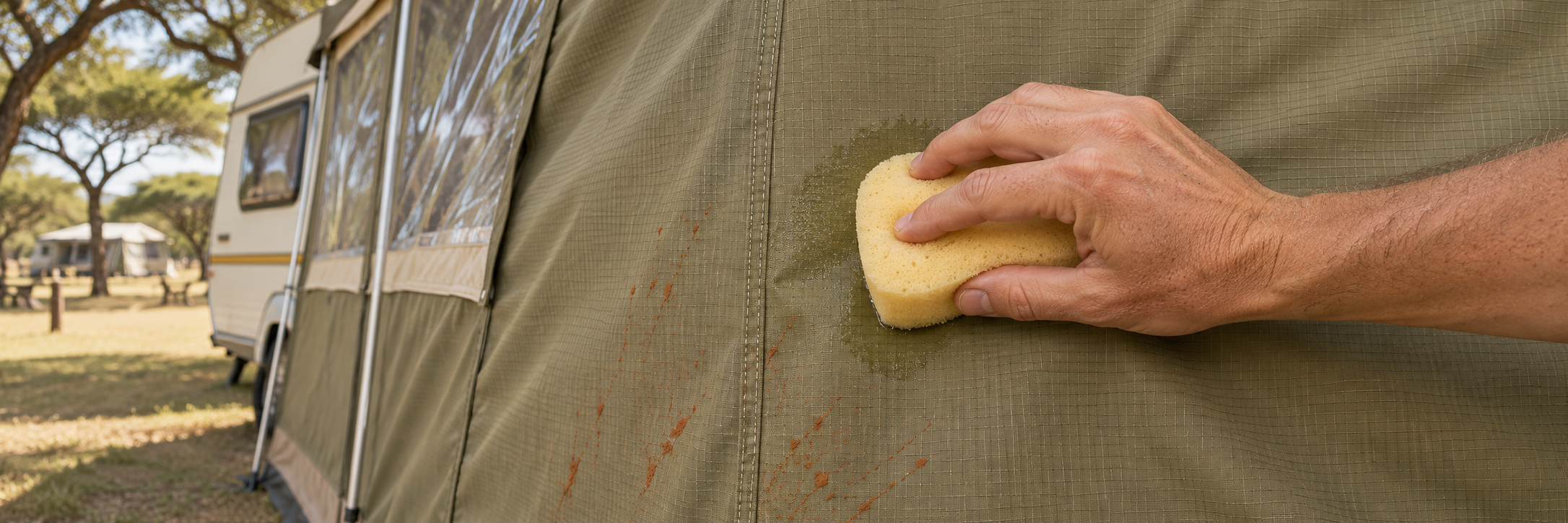
- Clean one panel at a time. Use a bucket of cool or lukewarm fresh water and a clean, soft sponge, or a garden hose on a gentle shower setting. Work from the top down so dirty water runs over areas you still have to clean. Change the water when grit collects in the bucket.
- Give a stubborn mark time to soften. Hold a wet cloth against it, lift the loosened dirt and rinse. If the manufacturer approves a cleaner, follow its dilution and contact time. Try it on a small concealed patch and let the patch dry before judging the result. A colour test alone cannot establish that a cleaner preserves the waterproof finish.
- Dry both faces. Open doors, pockets and folded flaps so air can circulate. Turn loose groundsheets over. Feel inside pole sleeves and along hems, webbing and zip covers before packing. These are the places worth checking when the broad panels already feel dry.
Tentco advises light sponging and rules out detergent and scrubbing brushes. Other awning manufacturers allow a soft brush on their own fabrics. Use the instructions for the tent in front of you. Leave pressure washers, steam cleaners, laundry machines and tumble dryers out of the routine.
How to clean cotton and polycotton canvas
For a dusty tent, start while the canvas is dry. If the manufacturer allows it, pass a soft brush lightly over the weave. Use fresh water and a soft sponge on marks that remain. Avoid soaking a whole side wall to remove one splash of mud near the bottom.
Even canvas described as uncoated can have a factory treatment that helps it shed water. Fabric manufacturers advise against soap, including environmentally friendly soap, on cotton and polycotton tent fabrics. That matters when someone recommends a gentle household cleaner on the strength of having used it on a different tent. If an old mark remains after a water clean, check with the tent maker before trying anything stronger.
How to clean ripstop canvas and lightweight flysheets
Ripstop describes the reinforcing threads woven through the cloth, often visible as small squares. The word tells you little about which cleaner the surface will tolerate. A heavy polyester ripstop frame tent and a thin, coated hiking flysheet can both carry that description.
On heavy ripstop canvas, rinse dust off gently, then sponge the marked area. Work lightly around stitching and where the roof rests on a ridge pole. If the inside face is coated, avoid rubbing it against paving while you clean the outside.
On a lightweight flysheet, support the panel with one hand while sponging with the other. Leave the edges of taped seams alone. If the underside feels sticky, flakes off or comes away on the sponge, stop. A waterproof coating can deteriorate during damp storage. More washing cannot restore it. Get advice on repair or flysheet replacement. Some manufacturers permit mild non-detergent soap on their tents for heavy soiling. Check the instructions for yours before using it.
How to clean silver reflective camping sheets
Take the cover down on a calm day and clean it separately. This gives you access to the underside and keeps dirt from washing straight onto the tent roof. Spread it on a clean, smooth surface large enough to support it. Dragging the silver face across a gritty driveway can do more damage than the dirt you set out to remove.
Silver knitted shade net. If the label identifies the material as knitted HDPE use a gentle fresh-water rinse from both sides to flush dust and salt out of the knit. Lift leaves out by hand. Support the sheet as you turn it, then open out the reinforced edges and straps to dry.
Water alone is a conservative starting point for an assembled camping cover.
Aluminised ripstop, foil-faced or laminated covers. Treat the silver face gently. Start by rinsing a small area and let water soften deposits. If the cover maker allows wiping, use a clean wet cloth with very light pressure. Avoid scourers, stiff brushes, metal polish and wringing.
If the silver layer lifts or flakes, stop cleaning that area. A dull patch may be worn material. Polishing it will not put the reflective layer back. South African camping covers are sold in both aluminium-faced and shade-net constructions.
How to clean polyethylene groundsheets and tarpaulins
For a solid PE groundsheet, lay it muddy side up on a clean surface. Rinse off loose soil, soften dried patches with water and wipe them with a sponge. Some suppliers allow mild washing-up liquid on their solid PE tarps. Use it only if permitted for yours, rinse thoroughly and keep the wash water off adjoining tent canvas. Turn the groundsheet over and allow both sides to dry before folding it.
For a netted PE groundsheet, lift it and give it a gentle shake first. Rinse from the reverse side to dislodge sand and grass caught in the mesh. Check the binding for small thorns before rolling it up. Store a groundsheet separately if there is any risk of transferring grit to the tent roof or windows.
How to clean caravan tent windows, mud skirts and zips
Rinse a clear window before touching it with a cloth.
One grain of sand trapped under your hand can leave a visible scratch. Use a clean, soft, wet cloth reserved for windows. Leave household glass cleaner and the sponge you used on the groundsheet in the bucket until you have checked what the window maker allows.
PVC mud skirts often collect the worst splashes. Support the skirt, soften the mud and wipe towards the bottom edge so the dirty water runs away from the sewn joint. At the door, rinse sand from the zip teeth before moving the slider. If the zip catches, check for grit or trapped fabric before pulling harder.
Common stains and what to do about them
| Problem | First action | When to stop |
|---|---|---|
| Red dust or fine sand | Shake off loose dust. Rinse remaining grit before using a sponge. | A faint red mark can remain. Repeated rubbing risks wearing a clean patch into the finish. |
| Coastal salt | Rinse exposed fabric with fresh water before storage, even when there is little visible dirt. Rinse and dry the poles separately. | Once the salt has rinsed away, allow the kit to dry. It needs no stain remover for salt alone. |
| Bird droppings | Attend to them promptly. Soften with a wet cloth, lift off the deposit and rinse. | If only a shadow remains, check the care guide before treating it again. |
| Tree gum or braai grease | Lift loose material or blot fresh grease without spreading it. Ask the maker what is compatible with the panel. | Avoid experimenting with thinners, paraffin, degreaser or concentrated dishwashing liquid. |
| Black spots or a musty smell | Unfold the tent outdoors and inspect both faces, seams, the groundsheet and the bag for mildew. Dry everything and consult the fabric-specific mildew instructions. | Widespread growth, weak cloth or a returning smell warrants assessment by a canvas repairer. |
Salt can attract moisture even after you put the tent away. Bird and insect deposits can also affect an awning’s water-repellent treatment if left in place. For a long coastal stay, a fresh-water rinse during the holiday is worthwhile. Follow the resort’s water-use rules and use a bucket where hoses are restricted.
Can you use vinegar or bleach on a mouldy tent?
Avoid using either as a general tent cleaner. Advice differs even among canvas manufacturers.
One may permit a diluted vinegar solution for a particular tent, while another prohibits detergents or bleach and specifies water alone. A recipe intended for a cotton tent, a shower wall or a metal pole is a poor guide to cleaning a caravan awning with a treated roof and clear windows.
Ask for the mildew instructions for the exact fabric and whether treatment calls for reproofing afterwards. A stain can remain after cleaning, and bleaching it pale tells you little about the strength of the cloth. If stitching pulls apart or the roof tears under ordinary handling, arrange a repair assessment before pitching it again.
Does a tent need waterproofing after cleaning?
A gentle fresh-water clean does not automatically call for reproofing. Once the tent is dry, pitch it correctly. If you suspect a leak, use a gentle shower of water on the outside while someone checks inside. Look for the first point where water enters.
A drip at a stitched joint, a small tear over a pole and water passing through a broad panel need different repairs.
If a cleaner has removed a water-repellent treatment, use the product and method recommended for that fabric. If seam tape has lifted or a coating is peeling, ask about repairing that layer before buying a spray for the whole tent. Outdoor Warehouse canvas care
When you have to pack up wet
If it is raining on departure morning, pack the wet tent for the journey and reopen it as soon as you get home. If there is no room to pitch it, drape sections over clean supports with space for air to reach both faces. Turn the panels and check the thick folds by hand. Dry the bag as well.
For a long-term camper taking down a caravan tent in stages, the silver cover and detachable walls can come off on an earlier dry day. That leaves fewer wet layers to deal with on the last morning.
Before the final pack, put your hand inside a pole sleeve and under a folded mud skirt. Those two checks can spare you the smell of mildew the next time you open the bag.